Create structured job criteria
Turn the job brief into required skills, preferred skills, must-haves, and minimum experience.
Preparing your page...
AI Resume Screening Guide
AI resume screening works best when recruiters define the role clearly, give the system structured hiring criteria, and review match signals with context. This page explains that process directly.
Main question
How do recruiters screen resumes using AI?
Short answer
By comparing CV signals to structured hiring criteria
Best next step
Use AI screening with recruiter review, not without it
What It Means
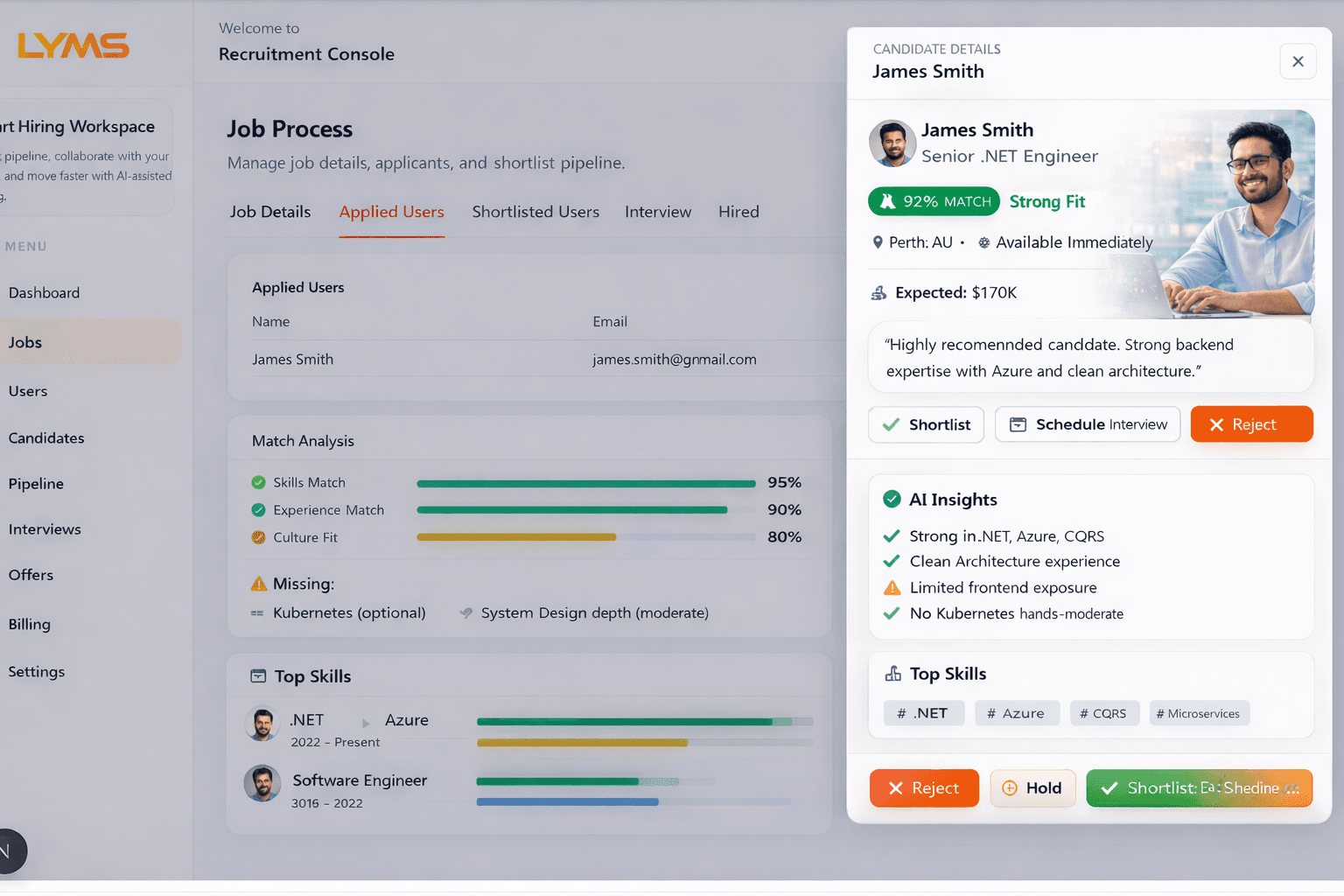
AI resume screening takes resume content, extracts candidate signals, and compares them against the job criteria that matter for the role.
That can include required skills, preferred skills, minimum experience, seniority, location, and must-have signals that recruiters care about when building a shortlist.
Turn the job brief into required skills, preferred skills, must-haves, and minimum experience.
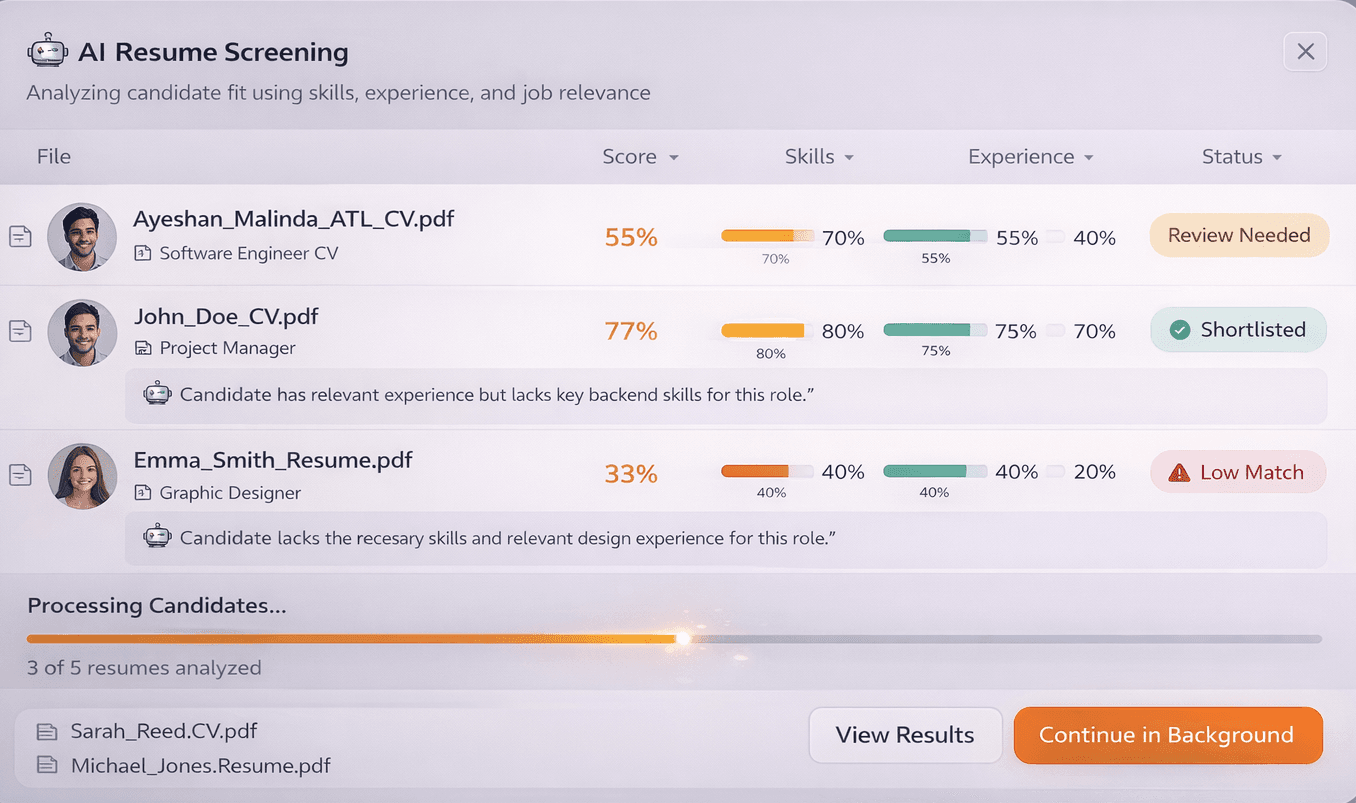
Let the AI parse resumes, detect relevant signals, and compare them against the role.
Use the fit signals to prioritize recruiter review instead of reading every CV from scratch.
The Problem
Recruiters lose time reading low-fit CVs
Important candidate signals get buried in long resumes
Shortlisting becomes inconsistent across roles and recruiters
Hiring managers get broad candidate lists instead of focused options
LYMS Solution
The quality of AI resume screening depends on the quality of the role inputs. LYMS helps recruiters define cleaner criteria so screening becomes more useful, explainable, and aligned to the actual role.
Reduce ambiguity by screening against required skills, nice-to-haves, and role fit signals.
Compare resumes by skills, experience, and role relevance instead of CV formatting alone.
Keep the recruiter in control while AI handles the first screening pass.
Hiring signal
Resume parsing, fit scoring, and shortlist support built for recruiter review.
Comparison
Use Cases
Handle more resumes per role without losing shortlist quality.
Start hereReduce first-pass review time for repeat hiring and high-volume roles.
Start hereReview a more focused candidate list that already reflects role criteria.
Start hereFAQ
AI resume screening extracts resume signals, compares them against job criteria such as skills and experience, and returns candidate fit indicators that help recruiters review faster.
No. It is most useful as a support layer that helps recruiters prioritize candidates and understand fit faster while keeping final decisions human.
Structured hiring criteria, clean required and preferred skill inputs, clear seniority expectations, and explainable fit signals all improve screening quality.
Related Guides
See how Australian hiring teams use AI to move from role brief to shortlist faster.
Read guideHelp job seekers create ATS-friendly resumes with AI guidance and recruiter-readable structure.
Read guideUnderstand how AI job matching connects candidate skills, seniority, and location to open roles.
Read guideExplore a developer hiring guide focused on AI-assisted shortlisting across Australia.
Read guideOpen LYMS Resume Studio to build ATS-ready resumes and improve job search readiness.
Read guideExplore LYMS AI Recruiter for explainable candidate matching and recruiter-ready shortlists.
Read guideThe best AI resume screening workflow is one that gives recruiters faster answers, cleaner shortlists, and better signal quality without removing human judgment.