Structure the profile
Capture candidate skills, summary, experience, target roles, and location preferences.
Preparing your page...
AI Matching Guide
AI job matching works best when job data and candidate profiles are structured clearly. This guide explains what AI job matching is, how it works, and why LYMS uses profile signals instead of relying only on resume keywords.
Main question
How does AI job matching work?
Short answer
It compares structured candidate and job signals
Best outcome
Better-fit candidates and better-fit jobs faster
What It Means
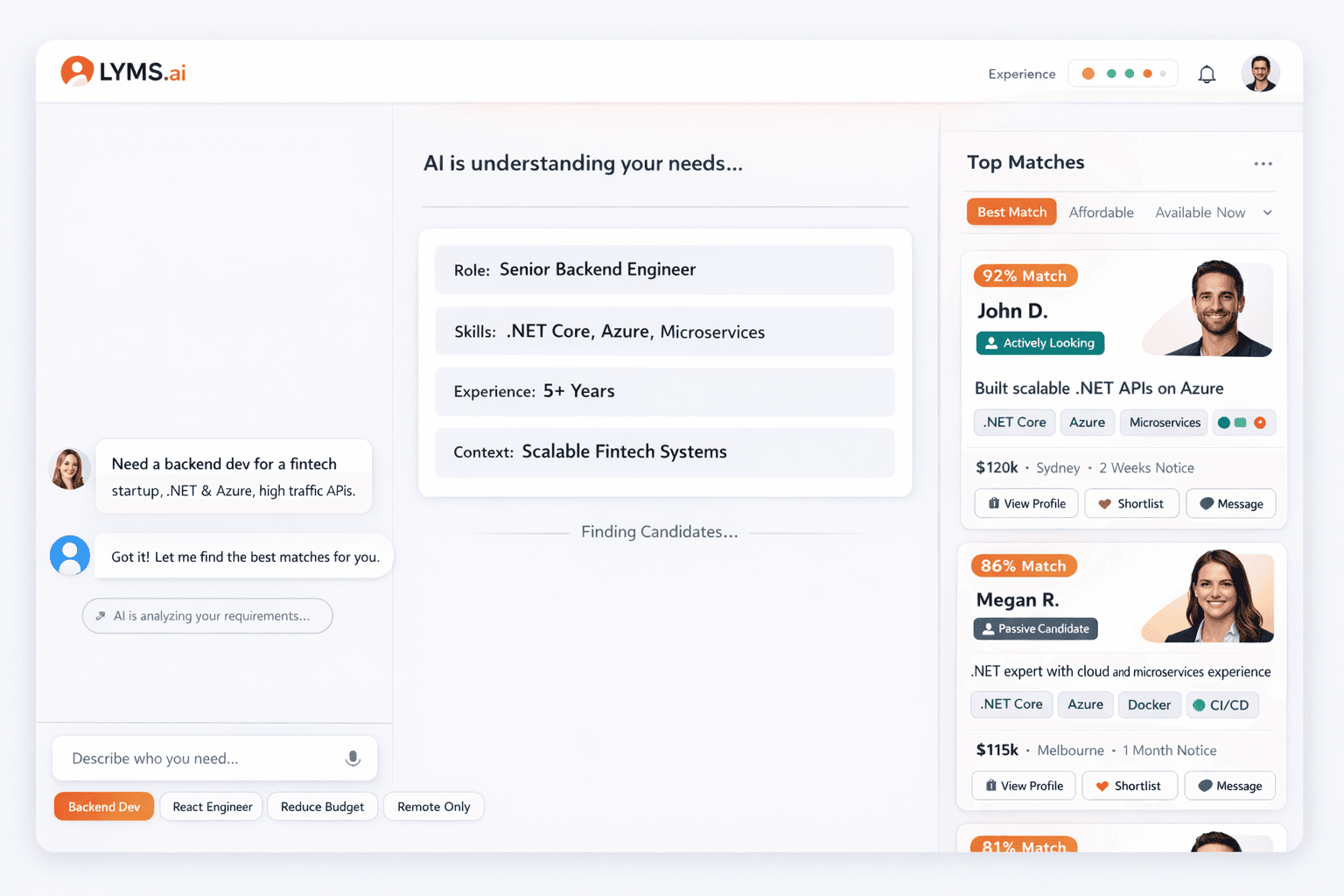
AI job matching is the process of comparing jobs and candidate profiles using structured signals such as skills, seniority, location, and role intent.
Instead of depending only on exact keyword overlap, a stronger matching system looks at related experience, readiness, and job context to surface more relevant opportunities.
Capture candidate skills, summary, experience, target roles, and location preferences.
Turn the job brief into required skills, preferred skills, must-haves, and experience signals.
Compare both sides to highlight the stronger matches for recruiter review or candidate discovery.
The Problem
Candidates describe similar experience with different wording
Roles often include both required and optional criteria
Seniority and context matter beyond exact skill overlap
Location and work preferences affect real-world fit
LYMS Solution
LYMS combines candidate profile data, job inputs, and matching logic to create a clearer view of fit. That helps both recruiters and job seekers move toward stronger outcomes faster.
Match core skills and adjacent relevance against the actual job context.
Use more than a resume by incorporating summary, preferences, and target roles.
Present fit signals in a workflow recruiters can review and act on quickly.
Hiring signal
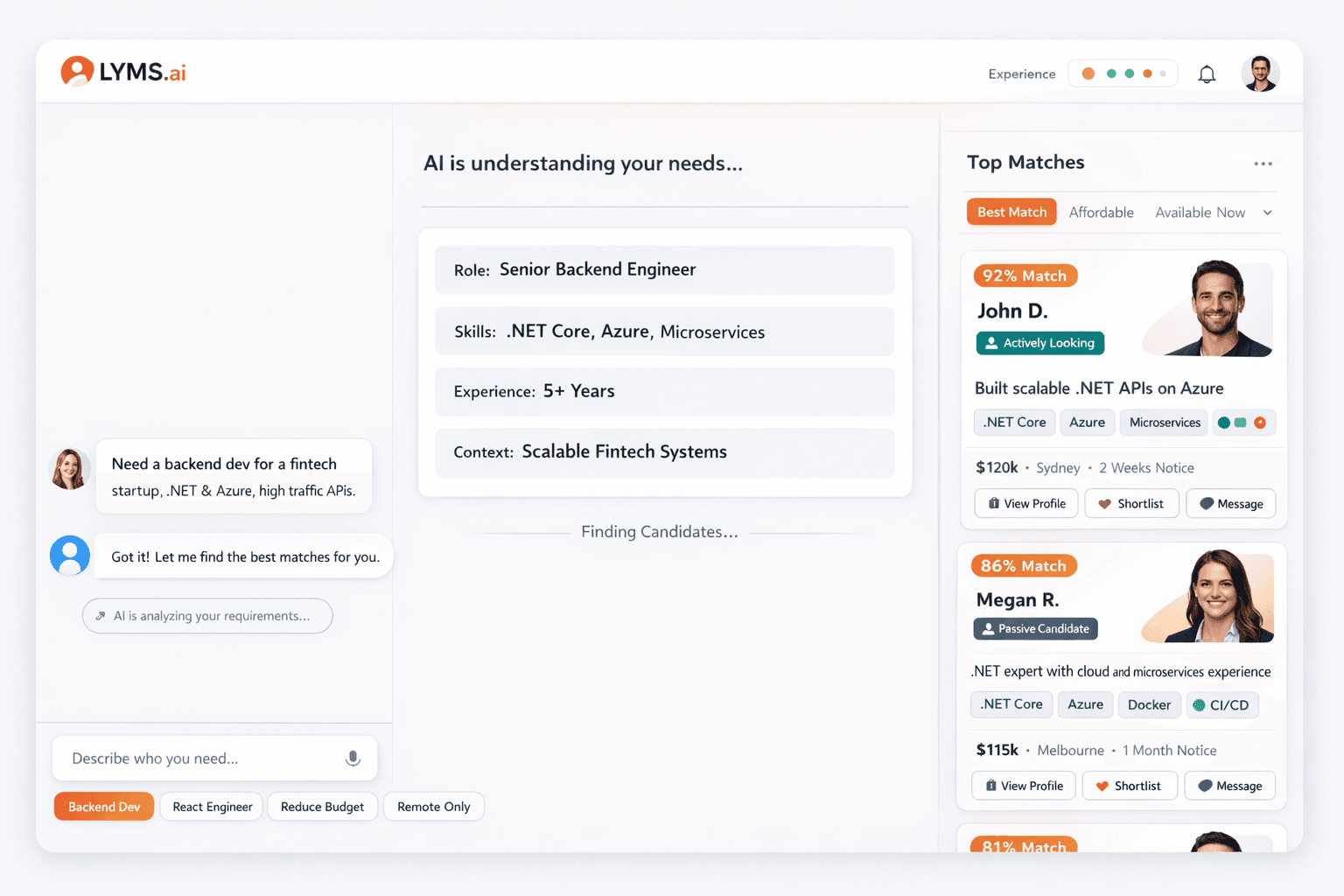
Role criteria and candidate profile signals combined into practical match support.
Comparison
Use Cases
Focus on roles that align more closely with your profile and target direction.
Start hereShortlist candidates faster with clearer signals around role relevance.
Start hereMatch developers and engineering talent with better role precision.
Start hereFAQ
AI job matching compares candidate signals such as skills, experience, seniority, role targets, and location against open jobs to surface stronger-fit opportunities.
Technical candidates often have overlapping skills across roles. AI job matching helps connect the right stack, experience level, and role intent to the right jobs faster.
Yes. Better matching means recruiters spend less time filtering low-fit applicants and more time reviewing candidates who are closer to the role.
Related Guides
See how Australian hiring teams use AI to move from role brief to shortlist faster.
Read guideLearn how AI resume screening works and how recruiters can reduce manual CV review.
Read guideHelp job seekers create ATS-friendly resumes with AI guidance and recruiter-readable structure.
Read guideExplore a developer hiring guide focused on AI-assisted shortlisting across Australia.
Read guideOpen LYMS Resume Studio to build ATS-ready resumes and improve job search readiness.
Read guideExplore LYMS AI Recruiter for explainable candidate matching and recruiter-ready shortlists.
Read guideThe real value of AI job matching is not volume. It is relevance. LYMS is built to improve that relevance for both sides of the hiring process.